
How to Choose the Right Dog Breed for Your Lifestyle (A Simple Step-by-Step Guide)
Bringing home a dog is one of the most exciting decisions you will ever make. But it is also a long commitment—often 10 to 15 years or more. So, before you fall in love with a cute face online, it helps to pause and ask one simple question: Does this dog fit the life I actually live?
Many dogs are returned or rehomed not because they are “bad dogs,” but because they were the wrong match. A herding dog stuck in a small apartment, a giant breed in a home with no space, or a high-energy puppy for someone who works long hours—these mismatches are stressful for everyone.
The good news? Learning how to choose the right dog breed is not complicated. In this guide, you will walk through 7 practical steps that help you match a dog’s energy, size, grooming needs, and personality to your real, everyday routine.
| Quick Win Before you look at a single breed, write down your average weekday: when you wake up, when you leave, when you get home, and how much free time you really have. Your dog will live that schedule with you. |
In This Guide
- Step 1: Be honest about your daily schedule
- Step 2: Match the dog’s energy to your activity level
- Step 3: Think about your home and space
- Step 4: Consider size, strength, and family life
- Step 5: Plan for grooming and shedding
- Step 6: Be realistic about training needs
- Step 7: Budget for the full cost of care
- Breed matching cheat sheet
- Mixed breeds, and rescue dogs
- Common mistakes to avoid
- FAQs
Step 1: Be Honest About Your Daily Schedule
Your schedule is the foundation of a good match. Every dog needs time for walks, play, training, feeding, and simple companionship. Some breeds handle quiet days well. Others become bored, noisy, or destructive when left alone too long.
Ask yourself:
- How many hours a day will the dog be home alone?
- Who will walk the dog in the morning, at midday, and in the evening?
- Do you travel often for work or weekends?
- Will your schedule change soon (new job, baby, moving)?
If you work long hours, you are not ruled out. You may simply be a better fit for an adult dog with a calmer personality—or you may need a plan for a dog walker or daycare.
Step 2: Match the Dog’s Energy to Your Activity Level
Energy level is the single biggest reason breed matches succeed or fail. A dog bred to herd sheep or run all day will not be happy with one short walk around the block.
| Energy level | What it usually needs | Often a good fit for |
|---|---|---|
| Low | Short daily walks, gentle play, lots of naps | Busy professionals, seniors, apartment living |
| Moderate | 1–2 good walks a day plus play and training games | Most families and first-time owners |
| High | Long daily exercise, running, sports, mental work | Runners, hikers, very active households |
Examples (general tendencies, not guarantees): Breeds such as the Cavalier King Charles Spaniel or Basset Hound are often more relaxed. Breeds such as the Border Collie, Australian Shepherd or Belgian Malinois usually need a lot of daily physical and mental exercise.
Remember: every dog is an individual. Breed tells you what is likely, not what is certain. Always meet the specific dog when you can.
Step 3: Think About Your Home and Space
A large house with a fenced yard and a small city apartment is very different environments. Neither is “better”—they simply suit different dogs.
If you live in an apartment.
- Look for dogs that are generally calm indoors and not prone to excessive barking.
- Think about stairs and elevators—carrying a senior large dog up three floors are hard.
- Check your building’s pet policy, including size or breed restrictions.
If you have a house and yard
- A yard is helpful, but it does not replace walks and play.
- Make sure fencing is secure—some breeds are skilled diggers or jumpers.
- Consider your climate: thick-coated breeds can struggle in hot weather, and short-coated breeds may need a coat in cold winters.
Step 4: Consider Size, Strength and Family Life
Size affects more than how much space a dog takes up. It changes how easy the dog is to walk, lift, travel with and care for as it ages.
- Small dogs are easier to carry and travel with, but can be fragile around very young children.
- Medium dogs are often a flexible middle ground for many families.
- Large and giant dogs need more space, more food, and an owner who can safely handle their strength on a leash.
| Family safety noteNo breed is “automatically safe” with children. Always supervise young children around dogs and never leave babies or toddlers alone with any dog. Teach kids to give dogs space while they eat, sleep or chew. |
Step 5: Plan for Grooming and Shedding
A beautiful coat often comes with real work. Some breeds need brushing several times a week and regular professional grooming. Others need little more than an occasional bath.
| Coat type | Typical care | Things to know |
|---|---|---|
| Short, smooth | Weekly brushing, occasional bath | May still shed a lot (e.g., Labradors, Pugs) |
| Double coat | Brushing several times a week | Heavy seasonal shedding (e.g., Huskies, German Shepherds) |
| Long or silky | Frequent brushing to prevent mats | Often needs professional grooming |
| Curly / low-shedding | Regular brushing and haircuts every few weeks | Less hair on furniture, but more grooming cost |
Allergies? No dog is truly 100% hypoallergenic. Some people react less to certain coat types, but it is best to spend time with the specific dog before committing. If allergies are a concern, talk with your doctor.
Step 6: Be Realistic About Training Needs
Every dog needs training—even small ones. Some breeds are eager to learn and quick to pick up new skills. Others are more independent and need extra patience and consistency.
- Plan for at least 10–15 minutes of training most days, especially in the first year.
- Use reward-based training: treats, praise, and play for the behavior you want.
- If you are a first-time owner, a breed known for being cooperative and people-focused can make life easier.
- Budget for a puppy class or a qualified, reward-based trainer.
Step 7: Budget for the Full Cost of Care
The adoption fee or purchase price is only the beginning. Larger dogs eat more, some breeds need regular grooming, and every dog need routine veterinary care.
Plan for these ongoing costs:
- Food and treats
- Routine vet visits, vaccines, and parasite prevention
- Grooming (at home or professional)
- Training classes
- Pet insurance or an emergency savings fund
- Supplies: leash, harness, bed, crate, toys
- Pet-sitter, walker, or boarding when you travel
For health questions about a specific breed, ask a licensed veterinarian before you commit. Some breeds are prone to certain health conditions, and knowing this early helps you plan.
Breed Matching Cheat Sheet
Use this as a starting point when choosing a dog breed. Then research each breed and, most importantly, meet the individual dog.
| If your life looks like this… | Look for a dog that is… |
|---|---|
| Busy weekdays, quiet evenings | Low to moderate energy, comfortable relaxing, often an adult dog |
| Active runner or hiker | High energy, athletic, enjoys long outdoor time |
| Small apartment in a city | Calm indoors, adaptable, not prone to frequent barking |
| Young children at home | Patient, sturdy, gentle temperament—with constant adult supervision |
| First-time dog owner | Friendly, people-focused, easy to train, moderate energy |
| Limited time for grooming | Short, easy-care coat |
Don’t Forget Mixed Breeds and Rescue Dogs
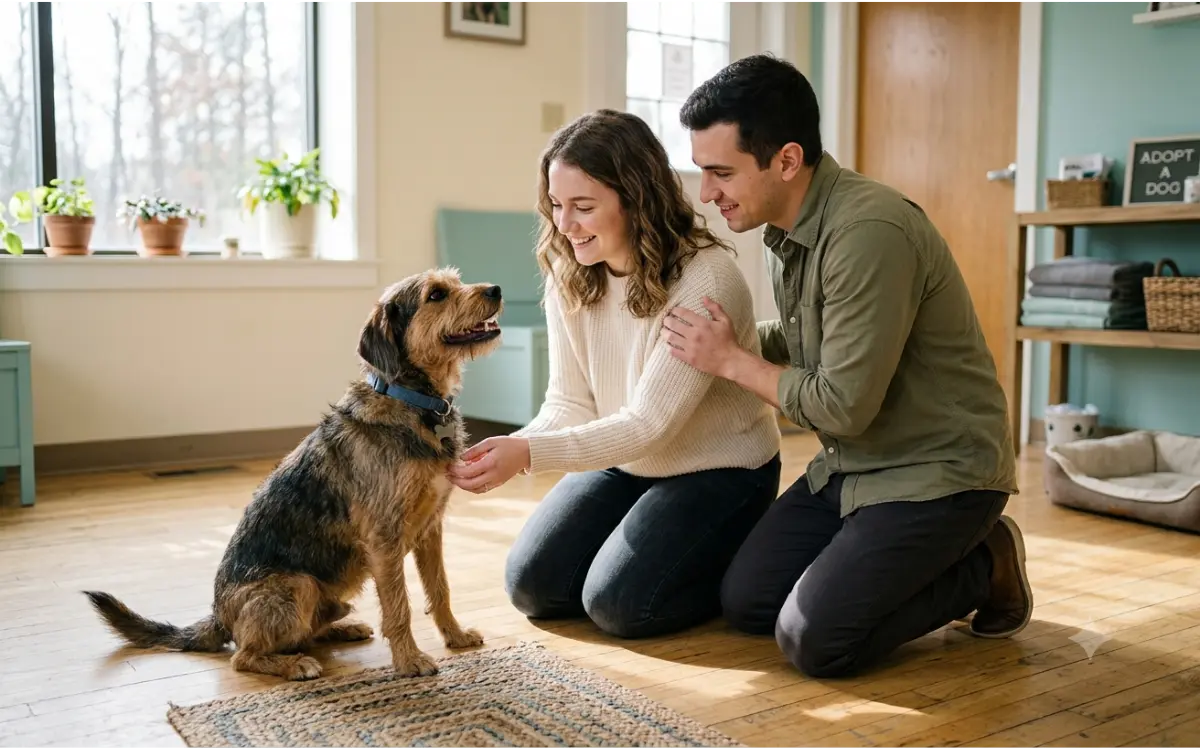
Breed is a helpful guide, but it is not the whole story. Mixed-breed dogs and rescue dogs can make wonderful companions, and many shelters and rescues can tell you a lot about a dog’s real personality.
- Ask the shelter how the dog behaves with people, other dogs and children.
- Adult rescue dogs often have a more predictable energy level than puppies.
- Foster-based rescues can describe how the dog acts in a real home.
Do This vs. Avoid This
| ✅ Do this | ❌ Avoid this |
|---|---|
| Match the dog to your real routine | Choosing based only on looks or trends |
| Meet the individual dog before deciding | Assuming every dog of a breed acts the same |
| Ask about energy, grooming, and health | Ignoring long-term costs |
| Involve everyone in the household | Surprising someone with a dog as a gift |
Common Mistakes When Choosing a Dog Breed
- Picking a breed from a movie or social media. A dog that looks calm on screen may need hours of exercise in real life.
- Underestimating puppy time. Puppies need frequent potty breaks, training, and supervision for months.
- Ignoring future plans. A new baby, a move, or a job change can affect what kind of dog will fit.
- Skipping the meet-and-greet. Personality varies widely, even within one breed.
- Not planning for grooming costs. Some coats need professional care every few weeks.
Frequently Asked Questions
What is the best dog breed for a first-time owner?
There is no single best breed. First-time owners often do well with dogs that are friendly, people-focused and moderate in energy. Many people also find an adult rescue dog easier than a puppy because its personality is already clear.
How do I know which dog breed fits my lifestyle?
Compare your daily schedule, activity level, home size, grooming time, and budget with the breed’s typical needs. Then meet the individual dog, because personality matters as much as breed.
Is a puppy or an adult dog better?
Puppies need a lot of time for training and supervision. Adult dogs often have settled energy and known habits. If your time is limited, an adult dog can be a great choice.
Are small dogs easier than large dogs?
Not always. Small dogs are easier to carry and travel with, but some are very energetic or vocal. Large dogs need more space and strength to handle, but many are calm at home.
What dog breeds are good for apartments?
Look for dogs that are calm indoors and adaptable rather than focusing on size alone. Some small breeds bark a lot, while some larger, low-energy dogs adjust well to apartment life with daily walks.
Are hypoallergenic dogs completely allergy-free?
No. No dog is completely allergy-free. Some people react less to certain coats, so spend time with the dog first and speak with your doctor if allergies are a concern.
Should I choose a mixed-breed dog?
Mixed-breed dogs can be wonderful companions. Ask the shelter or rescue about the dog’s energy, behavior and history to help you decide.
Final Thoughts
Choosing the right dog breed is really about choosing the right life together. When you match a dog’s energy, size, grooming needs and personality to your everyday routine, you set both of you up for a calmer, happier future.
Take your time. Ask questions. Meet the dog. The right match is worth the wait.
| Do This TodayWrite down your real weekday and weekend schedule.Rate your activity level: low, moderate or high.List your must-haves (size, coat, energy) and deal-breakers.Shortlist 3–5 breeds or mixes that match—then visit a local shelter or rescue. |
| Keep LearningWant a deeper, step-by-step plan? Our eBook How to Choose the Right Dog for Your Lifestyle includes worksheets and checklists to help you decide with confidence.Save this guide for later, or share it with a friend who is thinking about getting a dog. |