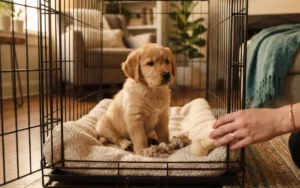
How to Crate Train a Puppy: A Calm, Step-by-Step Guide
Crate training gets a mixed reputation. Some people picture a sad puppy locked away. Others swear it’s the best thing they ever did for potty training and peaceful nights.
Here’s the truth: when you do it gently and gradually, a crate becomes your puppy’s own cozy den, a safe place to nap, chew, and settle. It also helps with house training, keeps a curious puppy out of trouble when you can’t watch, and makes vet visits and travel less stressful later on.
In this guide, you’ll learn how to crate train a puppy step by step, how long your puppy can stay in the crate, what to do about crying, and how to fix the most common problems along the way.
| Quick Answer: Choose a crate just big enough for your puppy to stand, turn around, and lie down. Make it comfy, then build good feelings with treats, meals, and chews inside, with the door open. Close the door for a few seconds at a time and slowly build up to longer periods. Keep crate sessions short for young puppies, take frequent potty breaks, and never use the crate as punishment. |
In This Guide
- Why crate training helps
- Choosing the right crate (type and size)
- Where to put the crate
- How to crate train a puppy: 7 steps
- How long can a puppy stay in a crate?
- Sample daily crate schedule
- Crate training at night
- Why is my puppy crying in the crate?
- Crate safety rules
- Troubleshooting common problems
- FAQs
Why Crate Training Helps
- Potty training: Most puppies avoid soiling the spot where they sleep, so a right-sized crate helps them learn to hold it between potty breaks.
- Safety: It keeps your puppy away from cords, shoes and household hazards when you can’t supervise.
- Better sleep: A predictable bed in a quiet spot helps puppies settle and rest.
- Calm alone time: Puppies learn that short periods alone are safe and normal.
- Easier travel and vet visits: A dog that’s comfortable in a crate is often less stressed in a car, at the groomer or during recovery after surgery.
A crate is a training and management tool, not a place for your puppy to spend most of the day. Puppies still need plenty of play, exercise, training, and time with you.
Choosing the Right Crate
Which crate type is best?
| Crate type | Pros | Things to know |
|---|---|---|
| Wire crate | Good airflow, easy to see out, often comes with a divider, folds flat | Can feel exposed, so many puppies like a blanket over part of it |
| Plastic crate | Cozy and den-like, sturdy, often approved for car and air travel | Less airflow and visibility; usually no divider |
| Soft-sided crate | Lightweight and portable | Easy for puppies to chew or scratch through; best for calm adult dogs that are already crate trained |
For most new puppies, a wire crate with a divider is a practical choice, because you can adjust the space as your puppy grows.
What size crate does my puppy need?
Your puppy should be able to stand up, turn around and lie down comfortably, but not have so much room that they can potty in one corner and sleep in another.
- Length: Measure from the tip of the nose to the base of the tail, then add about 2–4 inches.
- Height: Measure from the floor to the top of the head (or the tips of upright ears) while sitting, then add about 2–4 inches.
- Buy for the adult size if you can estimate it (ask your vet or breeder), then use a divider to make the space smaller for now.
- Move the divider back as your puppy grows, just enough to keep them comfortable.
Crate sizes and labels vary by brand, so always check the inside measurements rather than relying on a weight range alone.
Where to Put the Crate
- Place it in a room where your family spends time, such as the living room, so your puppy doesn’t feel shut away.
- At night, keep the crate in or next to your bedroom for the first weeks so your puppy can hear and smell you, and you can hear when they need to potty.
- Keep it out of direct sunlight and away from heaters, air vents and drafts.
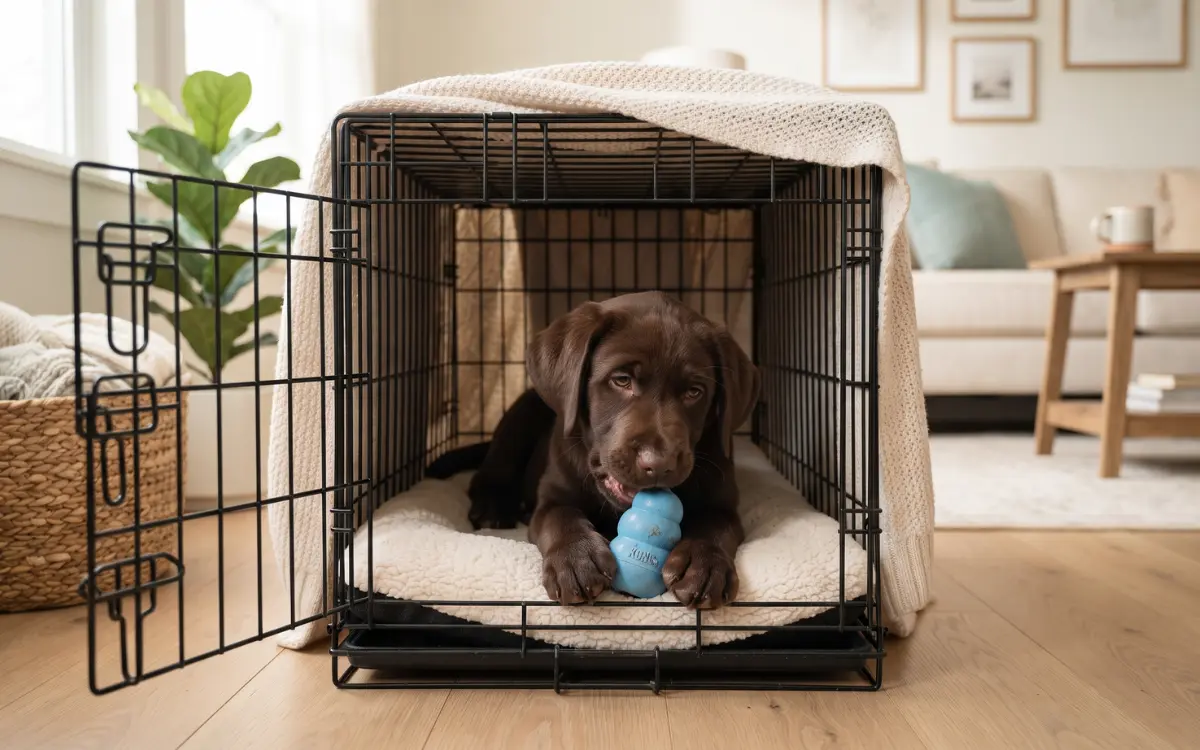
- Cover part of a wire crate (top and sides) with a breathable blanket if your puppy settles better with a den feel. Always leave the front open for airflow.
How to Crate Train a Puppy: 7 Steps
Go at your puppy’s pace. Some puppies move through these steps in a few days. Others need a few weeks. Both are normal.
Step 1: Make the crate a happy place
Set up the crate with a soft bed and a safe chew toy. Prop or remove the door so it can’t swing shut and startle your puppy. Let them explore it on their own.
Step 2: Play the treat game
Toss a few tasty treats near the crate, then just inside the door, then all the way to the back. Praise calmly when your puppy goes in. Let them come back out whenever they want. Never push or pull your puppy inside.
Step 3: Feed meals in the crate
Place your puppy’s food bowl near the crate, then just inside, then at the back over several meals. Once your puppy eats comfortably inside, gently close the door while they eat and open it as soon as they finish. Over the next meals, leave the door closed a little longer after they finish, a few seconds at a time.
Step 4: Add a cue word
Once your puppy happily walks in, say a cue like “crate” or “bed” as they enter, then reward them. Soon you can say the cue first and reward when they go in.
Step 5: Build short, calm door-closed sessions
Ask your puppy to go in, give a long-lasting chew or a food-stuffed toy, and close the door. Sit nearby for a few minutes, then let them out while they’re calm. Gradually build up the time and start moving around the room or briefly stepping out of sight.
Step 6: Practice short departures
When your puppy can relax in the crate for around 30 minutes with you at home, start leaving the house for short trips. Keep goodbyes and hellos low-key. Calmly crate your puppy a few minutes before you go, and don’t make a big fuss when you return.
Step 7: Use the crate at night
Put the crate near your bed. Do a last calm potty break, then settle your puppy with a quiet “bedtime.” Expect to take young puppies out once or more during the night at first (more on that below).
| Quick Win: Practice crate time when you’re home, not only when you leave. If the crate only ever means “you’re going away,” your puppy may start to dread it. |
How Long Can a Puppy Stay in a Crate?
There’s no single perfect number. It depends on your puppy’s age, bladder control, health and how well they’re crate trained. Shelter and rescue organizations commonly recommend keeping young puppies to no more than about 2–3 hours at a time during the day.
| Puppy age | Daytime crate stretches (starting points) | Notes |
|---|---|---|
| 8–10 weeks | Short sessions, often 30–60 minutes while learning | Potty breaks very often, at least every 1–2 hours while awake |
| 10–16 weeks | Building toward 1–2 hours | Always after a potty break, play and some attention |
| 4–6 months | Up to about 2–3 hours | Bladder control is improving, but every puppy is different |
| 6 months + | Can gradually increase | Adult dogs still need daily exercise, play, and company. No dog should live most of the day in a crate |
These are general starting points, not rules. Watch your own puppy: if they’re having accidents in the crate or crying hard, the sessions are probably too long. Your vet can help with timing if your puppy has health issues.
Working long hours? Arrange a midday visit from a family member, neighbor, dog walker or sitter, or use a safe puppy pen with a potty area for longer stretches.
Sample Daily Crate Training Schedule (Young Puppy)
| Time | Activity |
|---|---|
| 7:00 am | Out of the crate → straight outside to potty |
| 7:15 am | Breakfast (in the crate with the door open or closed) → potty |
| 7:45 am | Play, short training game, cuddles |
| 8:30 am | Potty → crate nap with a chew toy |
| 10:30 am | Out → potty → play and explore |
| 11:30 am | Potty → crate nap |
| 1:00 pm | Out → potty → lunch → potty → calm play |
| 2:00 pm | Crate nap (practice a short departure if your puppy is ready) |
| 4:00 pm | Out → potty → training game → gentle socialization |
| 5:30 pm | Dinner → potty → family time |
| 7:00 pm | Short crate rest with a chew while you’re nearby |
| 9:30–10:30 pm | Last potty break → crate for bedtime |
| Overnight | Quiet potty trip if your puppy wakes and fusses |
Adjust the times to your day. The pattern is what matters: potty → play or train → potty → crate nap, repeated.
Crate Training at Night
- Keep the crate next to your bed for the first few weeks.
- Do a calm last potty break right before bed.
- Some owners pick up the water bowl an hour or two before bedtime to reduce night trips. Ask your vet first, especially in hot weather or if your puppy has health issues.
- If your puppy wakes and cries, take them out on leash to the potty spot. Keep it quiet and boring: no play, no lights, no chatting.
- If they potty, praise softly and go straight back to the crate. If they don’t, return them to the crate anyway.
- Most puppies need fewer night trips as they grow.
Why Is My Puppy Crying in the Crate?
Some crying is normal, especially in the first few nights. The key is figuring out why your puppy is crying, so you respond the right way.
| What’s happening | Likely reason | What to do |
|---|---|---|
| Crying after a long nap or overnight | Needs to potty | Take them out calmly, then straight back |
| Crying right after you close the door | Session is too long or too soon | Go back a step; make sessions shorter and more rewarding |
| Whining but settles in a few minutes | Protest or getting used to it | Wait for a quiet pause before opening the door |
| Barking, chewing bars, drooling, panicking | Real distress | Stop crate sessions and talk to your vet or a qualified trainer |
| Crying when bored or full of energy | Under-exercised | Add play and a sniff walk before crate time |
Don’t yell, bang on the crate or punish your puppy for crying. It adds stress and makes the crate scarier. And try to let them out during a quiet moment, not in the middle of loud protest, unless you think they need to potty.
| Important: If your puppy panics in the crate (frantic escape attempts, injuring themselves, heavy drooling, constant howling), stop crate training for now. These can be signs of serious anxiety. Talk with your veterinarian or a qualified, reward-based trainer or veterinary behavior professional about the best plan. |
Crate Safety Rules
- Remove collars and harnesses in the crate, as tags and buckles can get caught on wire.
- Only give safe chews and toys that can’t be swallowed or easily broken into pieces.
- Watch bedding. If your puppy shreds or eats fabric, remove it and use a chew-resistant mat instead.
- Keep it cool and ventilated. Never leave a crate in direct sun, a hot car or near a heater.
- Never use the crate as punishment. It should always feel like a safe, happy space.
- Supervise kids. Teach children that the crate is the puppy’s quiet zone, not a place to climb in or bother the puppy. Always supervise young children around puppies.
Troubleshooting Common Crate Training Problems
“My puppy won’t go in the crate.”
Go back to the treat game and meals with the door open. Use higher-value treats and keep sessions short. Make sure the crate is in a calm spot and the door can’t bang.
“My puppy has accidents in the crate.”
The crate may be too big (use a divider), sessions may be too long, or your puppy may need more frequent potty breaks. Clean with an enzyme cleaner. If accidents continue or your puppy is peeing very often, check with your vet to rule out a urinary infection or other health issue.
“My puppy was doing great, and now they hate the crate.”
Regression happens. Think about what changed: longer sessions, the crate only being used when you leave, a scary event, or a new routine. Go back a few steps and rebuild with fun, short sessions.
“My puppy cries every time I leave the room.”
Practice tiny absences while your puppy has a chew: step out for a few seconds and return before they fuss. Build very gradually. If crying turns into panic, talk to a professional.
Do This vs. Avoid This
| ✅ Do this | ❌ Avoid this |
|---|---|
| Build positive feelings with treats, meals and chews | Forcing your puppy into the crate |
| Keep sessions short and build slowly | Leaving a young puppy crated for hours |
| Take potty breaks before and after crate time | Using the crate as punishment |
| Practice while you’re home | Only crating when you leave the house |
| Keep the crate close at night | Shutting the puppy in a far-off room |
Frequently Asked Questions
How long does it take to crate train a puppy?
It varies. Some puppies are comfortable within a few days; others need several weeks of short, positive practice. Going slowly usually gets you there faster overall.
Should I let my puppy cry it out in the crate?
Not if they might need to potty or are truly distressed. Make sure needs are met first (potty, exercise, attention). Mild whining that fades in a few minutes is common; wait for a quiet pause before opening the door.
Should I put a puppy pad in the crate?
Usually no. A pad can encourage your puppy to potty in the crate, which works against house training. If your puppy must be left longer, use a puppy pen with a separate potty area instead.
Should I cover my puppy’s crate?
Many puppies settle better with a breathable cover over part of a wire crate. Leave the front and at least one side open for airflow, and remove the cover if your puppy pulls it in to chew it.
Is crate training cruel?
When done gradually and used for reasonable periods, a crate can give puppies a safe, comfortable den. It becomes a problem when a dog is crated for too long, too often, or as punishment.
Can I crate train an older puppy or adult dog?
Yes. The same steps work. Adult dogs may need more time if they’ve had bad experiences with confinement, so go slowly and keep it positive.
When can my puppy stop sleeping in a crate?
When they’re reliably house-trained and don’t chew household items, you can try leaving the door open or giving more freedom gradually. Many dogs keep using an open crate as their bed.
Final Thoughts
Crate training isn’t about locking your puppy away. It’s about giving them a safe, calm place of their own and helping them learn the routines that make family life easier.
Keep it positive, go at your puppy’s pace, and celebrate the small wins: the first time they walk in on their own, the first quiet night, the first nap with the door closed. Those moments add up fast.
| Do This Today: Measure your puppy and adjust the crate divider. Play the treat game 3 times (2 minutes each). Feed one meal in the crate with the door open. Move the crate next to your bed for tonight. |
| Keep Learning. Get the free Puppy First Week Planner: day-by-day checklists, a potty log, and a vet visit sheet. Want a complete house-training plan? Potty Training in 7 Days and The First-Time Puppy Owner’s Playbook take you step by step through the months ahead. Save this guide for later, or share it with a friend bringing home a puppy soon. |
It varies. Some puppies are comfortable within a few days; others need several weeks of short, positive practice. Going slowly usually gets you there faster overall.